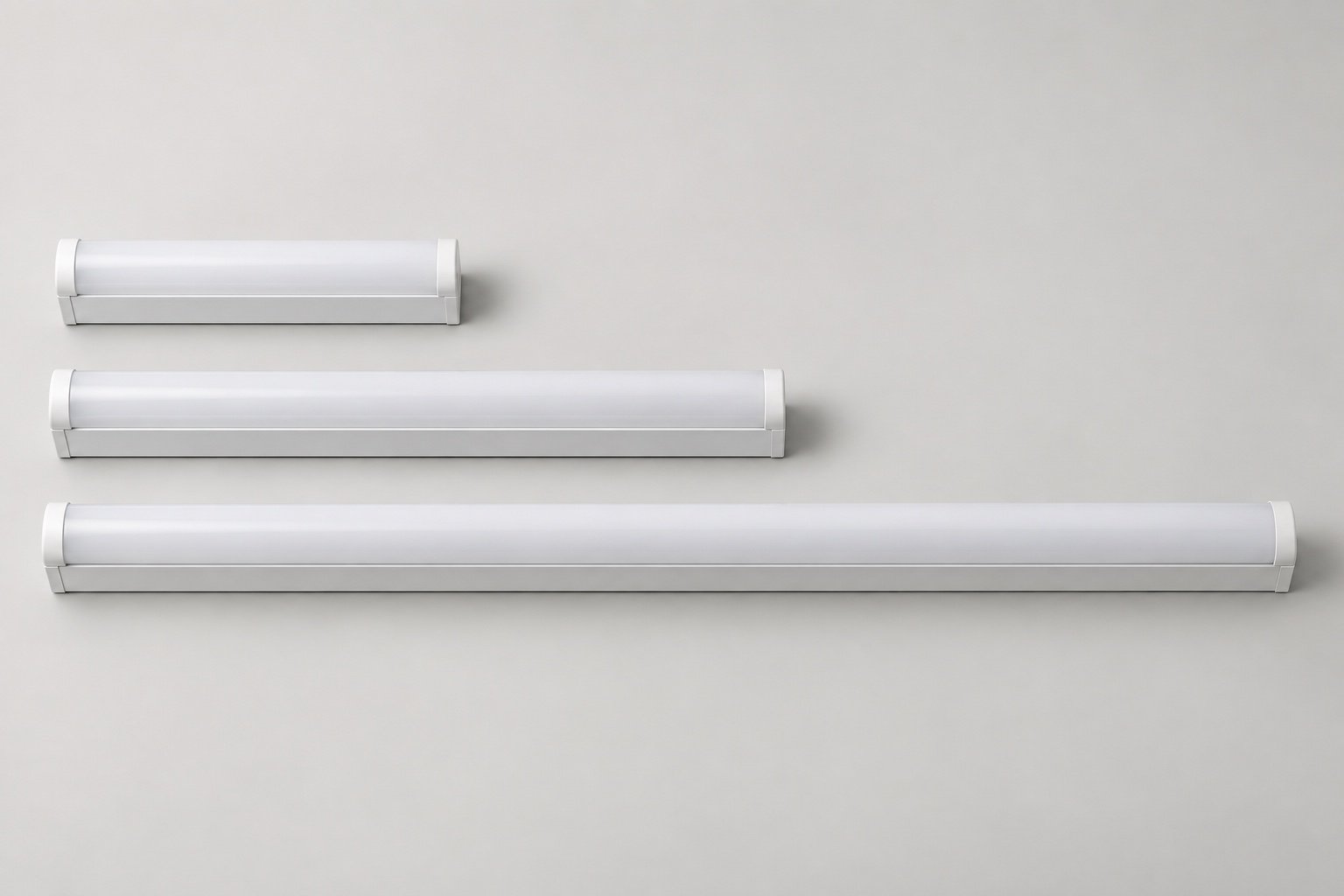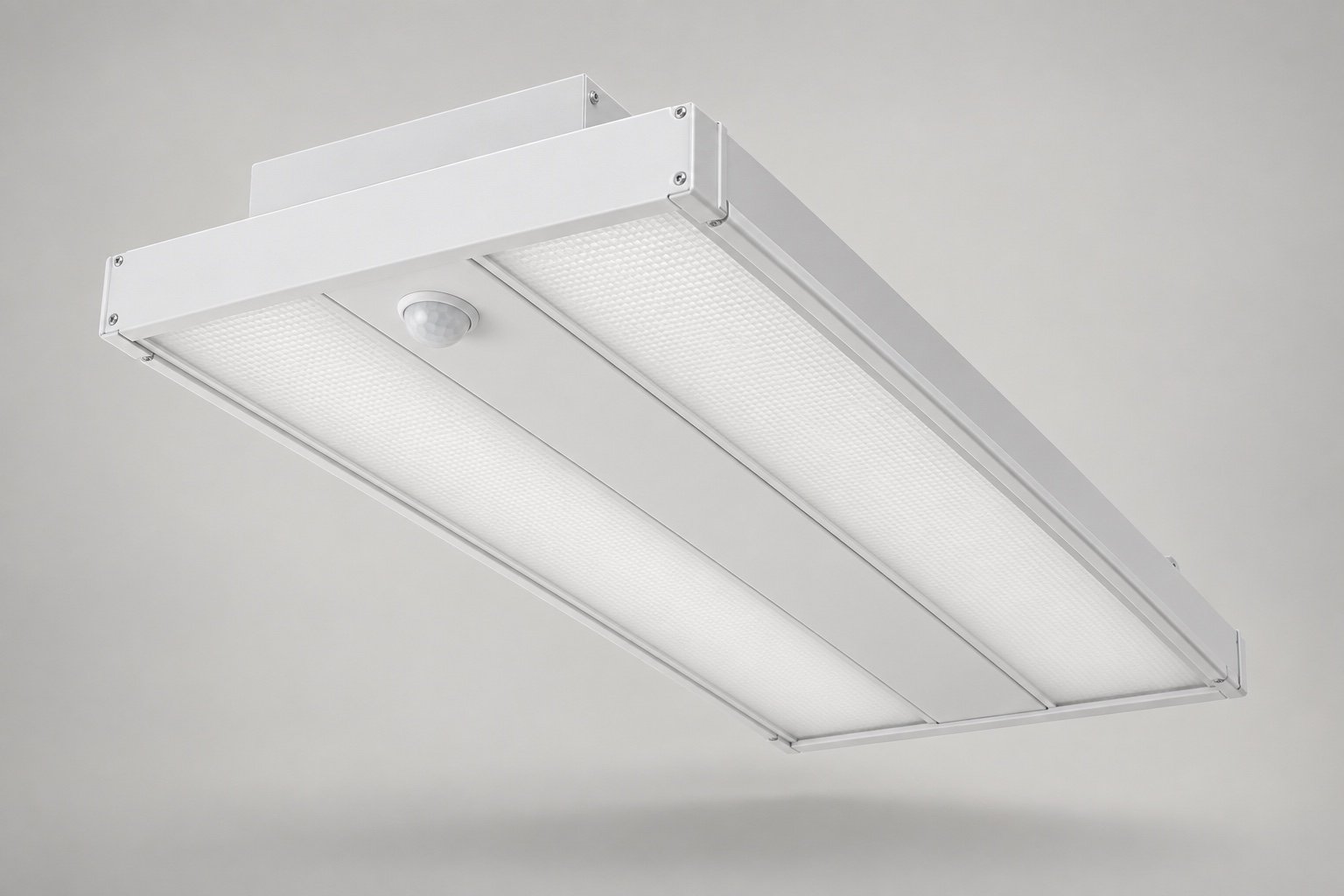
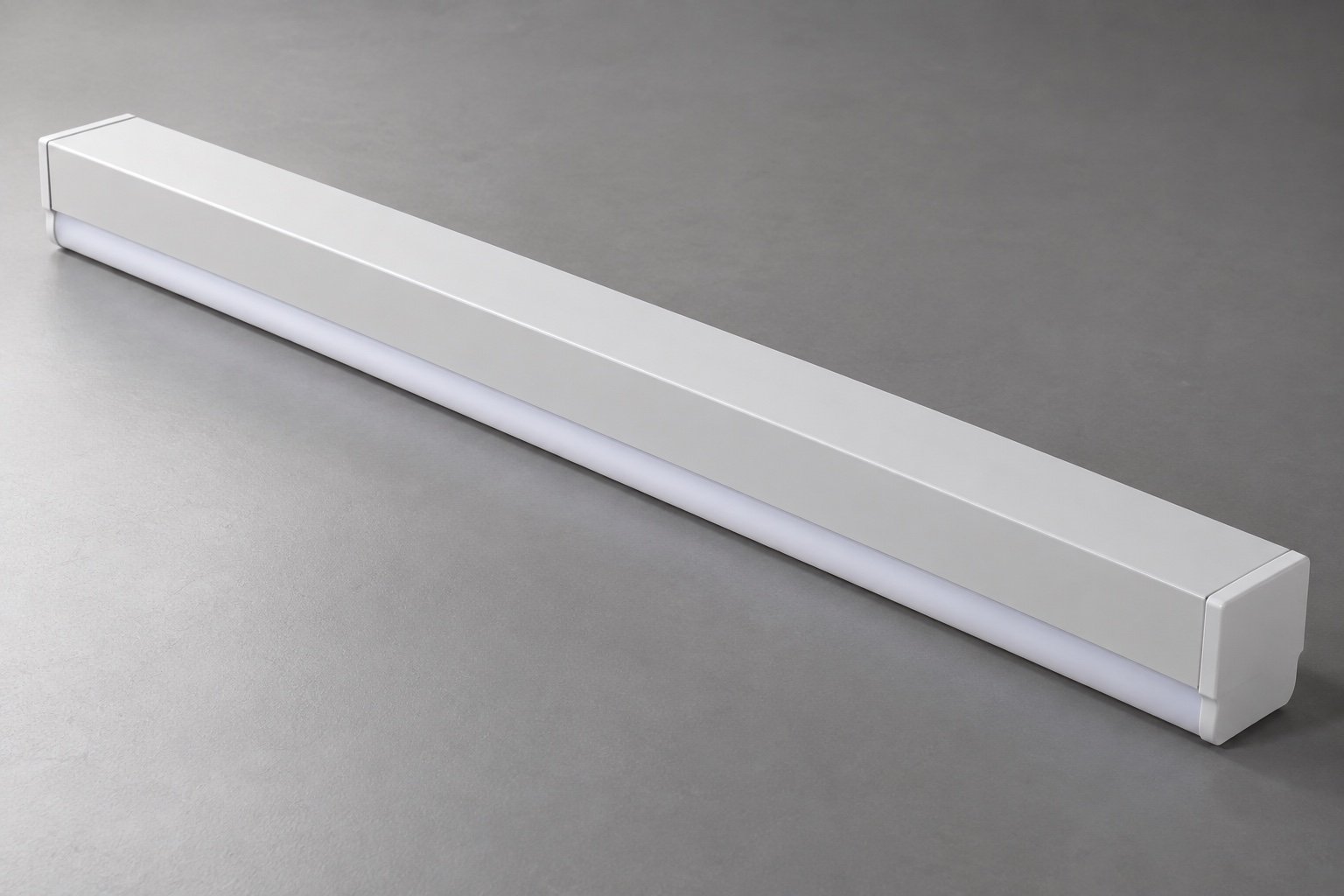
Keeping a linear luminaire housing can be a reasonable starting constraint for a DLC redesign. The decision depends on whether its cavity, interfaces and thermal arrangement can support the revised optical and electrical configuration. An unchanged exterior does not establish that the product's performance or existing reports remain unchanged.
For a brand or OEM, the useful question is therefore specific: which parts of the existing platform can stay while the identified performance gap is resolved?
Define what must stay before judging the housing
“Keep the housing” can mean preserving several different things: the external dimensions, the extrusion die or sheet-metal tooling, the mounting interface, the visible finish, or every existing part. Those constraints lead to different redesign options.
An office pendant may need to retain its suspension positions and continuous-run appearance. A linear industrial product may be constrained by mounting points and access to the electrical compartment. These are planning examples, not completed Felix projects. Each brief should distinguish fixed conditions from preferences that can be traded against cost or performance.
The existing product drawing is the starting reference. Its revision, tolerances and actual assembly should agree before it is used to approve replacement parts. Where the question concerns an installed building rather than an OEM platform, the reuse, adapt or replace guide addresses that different decision.
Check the optical cavity and component interfaces
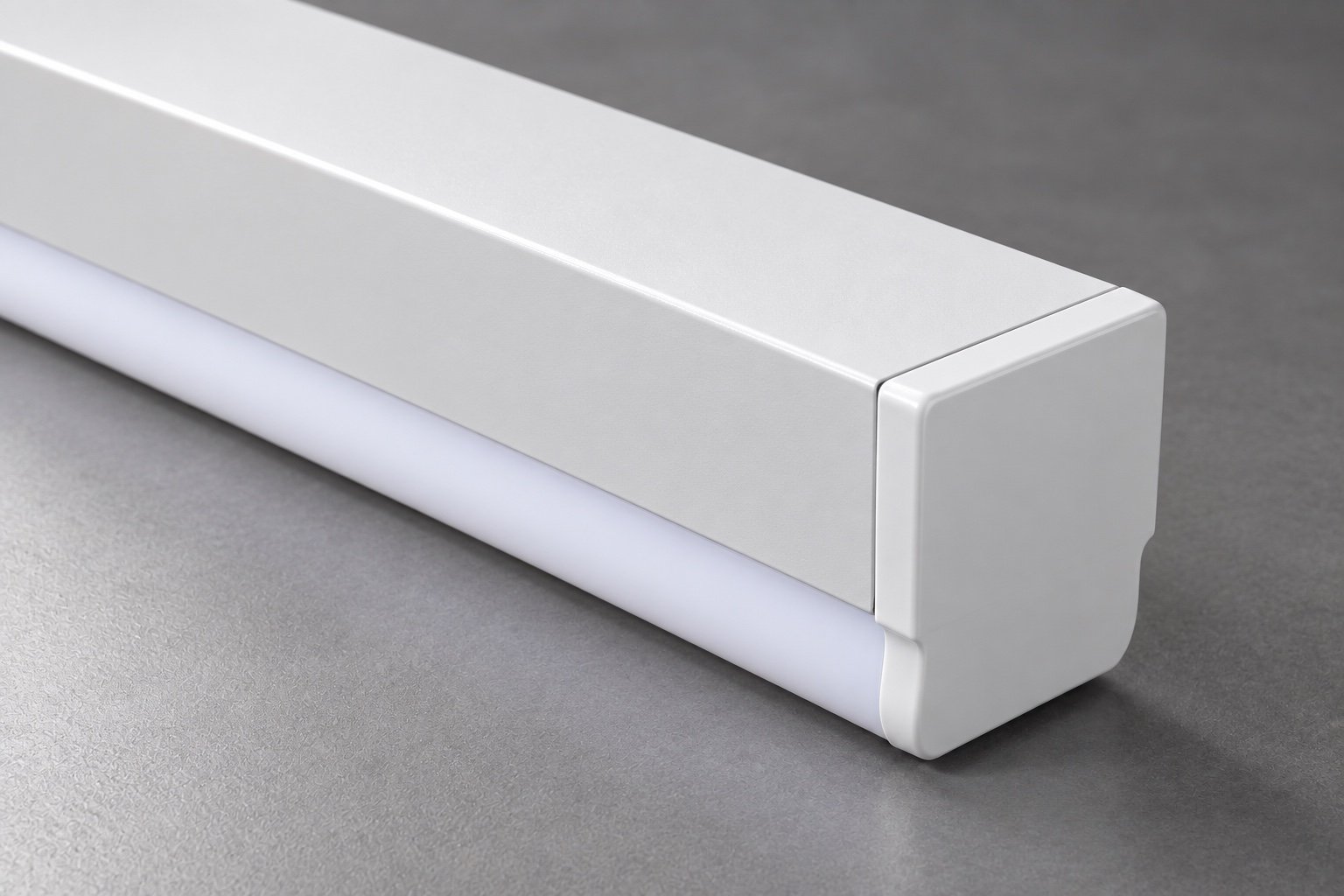
The optical review begins at the LED mounting plane and follows the available space to the light opening. Relevant details include board position, aperture, cover or lens retention, end-cap interference and the route by which parts enter the housing during assembly.
A lens that fits the opening can still require a different source position or mounting arrangement. Conversely, a compatible optical alternative might be possible with a local carrier or retaining-part change. These are candidates for drawing review and prototyping, not assumptions based on overall width.
The same reasoning applies to an extrusion and a formed sheet-metal body, although their modification routes differ. A nominal envelope does not describe folded edges, fastener access, internal ledges or allowable assembly tolerances. Those details determine whether the proposed optical relationship can be built repeatedly.
Follow the thermal path and reserve service space
A revised optical arrangement should be reviewed with the board's physical support and heat-transfer interfaces. Moving the source is also a mechanical change when it alters contact, fasteners or mounting material. Its thermal consequence needs evidence from the revised configuration.
Electronics impose another set of constraints. The driver, sensor, controller, wiring and connectors need usable space, with an assembly sequence and access for the intended servicing method. A component fitting inside the cross-section does not demonstrate that a finished unit can be wired, closed or maintained as intended.
Where driver lifetime is part of a Premium application, the DLC requirements, Section 14.3 address the in-situ thermal evidence and supporting driver documentation. A larger empty cavity is not proof that those conditions have been met.
Choose retention, local modification or a new housing
| Route | When to investigate it | What must be resolved |
|---|---|---|
| Retain the housing | Candidate optics and electronics can use the existing envelope and interfaces | Fit, operating conditions and performance of the complete revised assembly |
| Modify local parts | A carrier, retaining part, end cap or electrical arrangement is the limiting interface | Revised drawings, tolerances, assembly sequence and affected evidence |
| Develop a new housing | The required arrangement cannot be accommodated within the retained constraints | New tooling and parts, interfaces, prototype scope and validation plan |
Retaining a major part may reduce the scope of tooling work, but it can also constrain the solution. A new housing may create space for a better arrangement, while adding development and validation work. Actual quotations and prototype findings should decide that comparison; neither route carries an automatic cost or timing advantage.
This article concerns a manufacturer's product revision. A kit intended for installation into existing luminaires has its own eligibility and host-housing considerations under the DLC retrofit-kit rules. Keeping a body does not by itself establish that kit's qualification route.
Turn the decision into a controlled prototype
The prototype package should name retained parts, revised parts and the evidence needed for each affected characteristic. It should also identify the actual LED board, driver, optical option and operating settings. That allows the laboratory and application owner to assess whether earlier reports still represent the design.
The DLC product-update guidance ties supporting information to the extent of product changes. Preserving the exterior is therefore an engineering constraint, not a waiver of test or documentation requirements.
Discuss housing retention with Felix using the current section, assembly drawing, reports and a short list of conditions that cannot change. Felix's optical and mechanical support can then focus on the parts worth retaining and the interfaces that need a different solution.