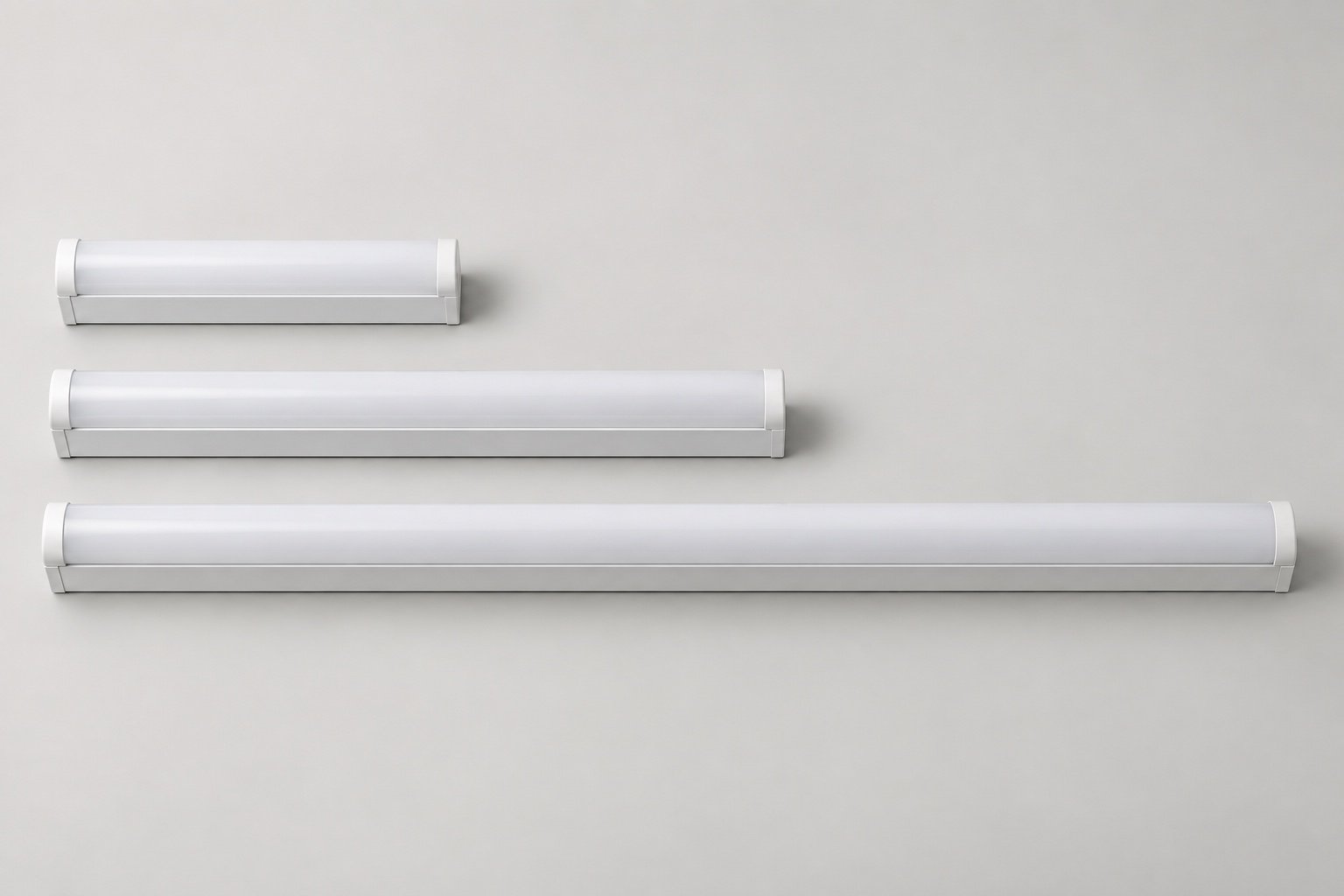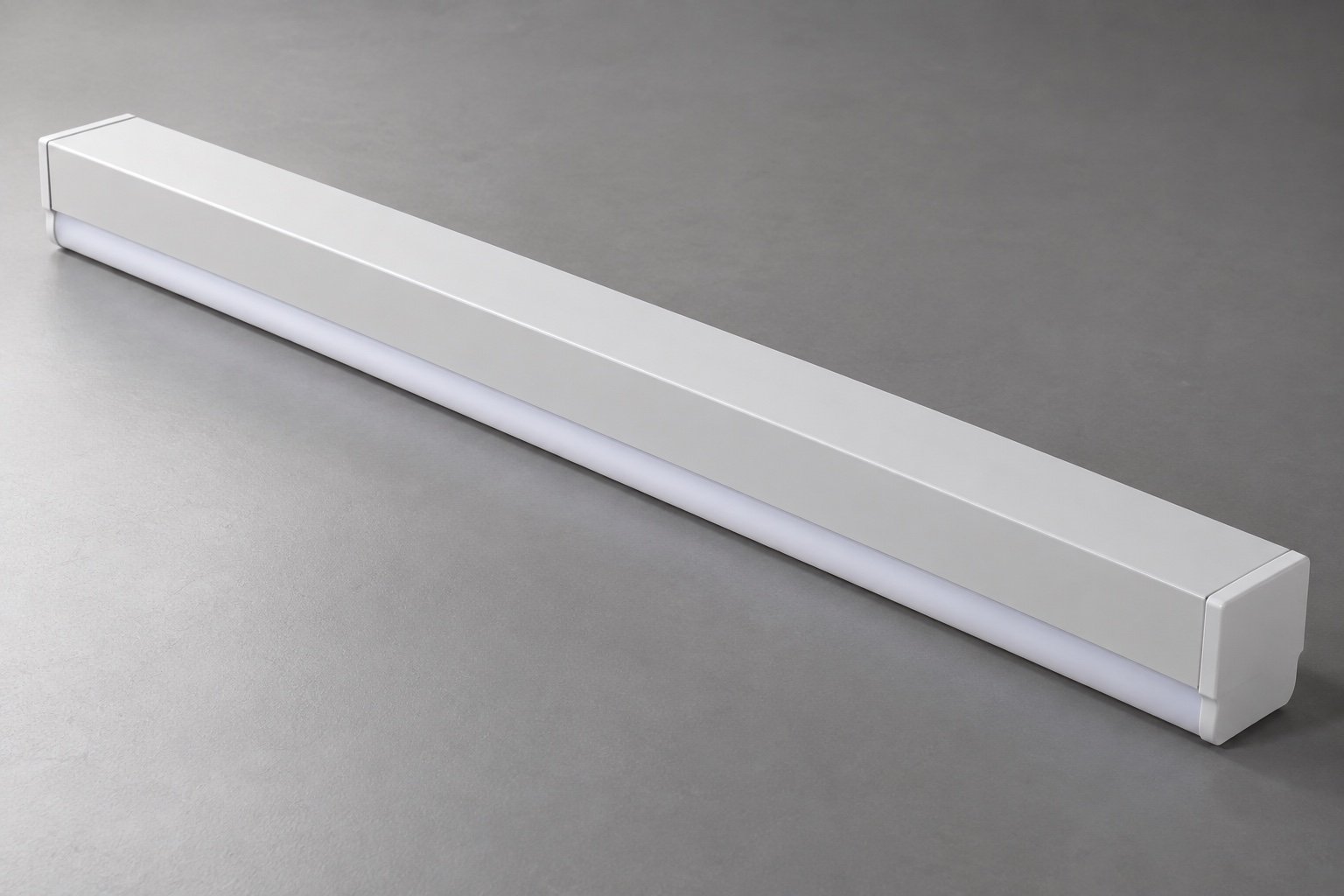
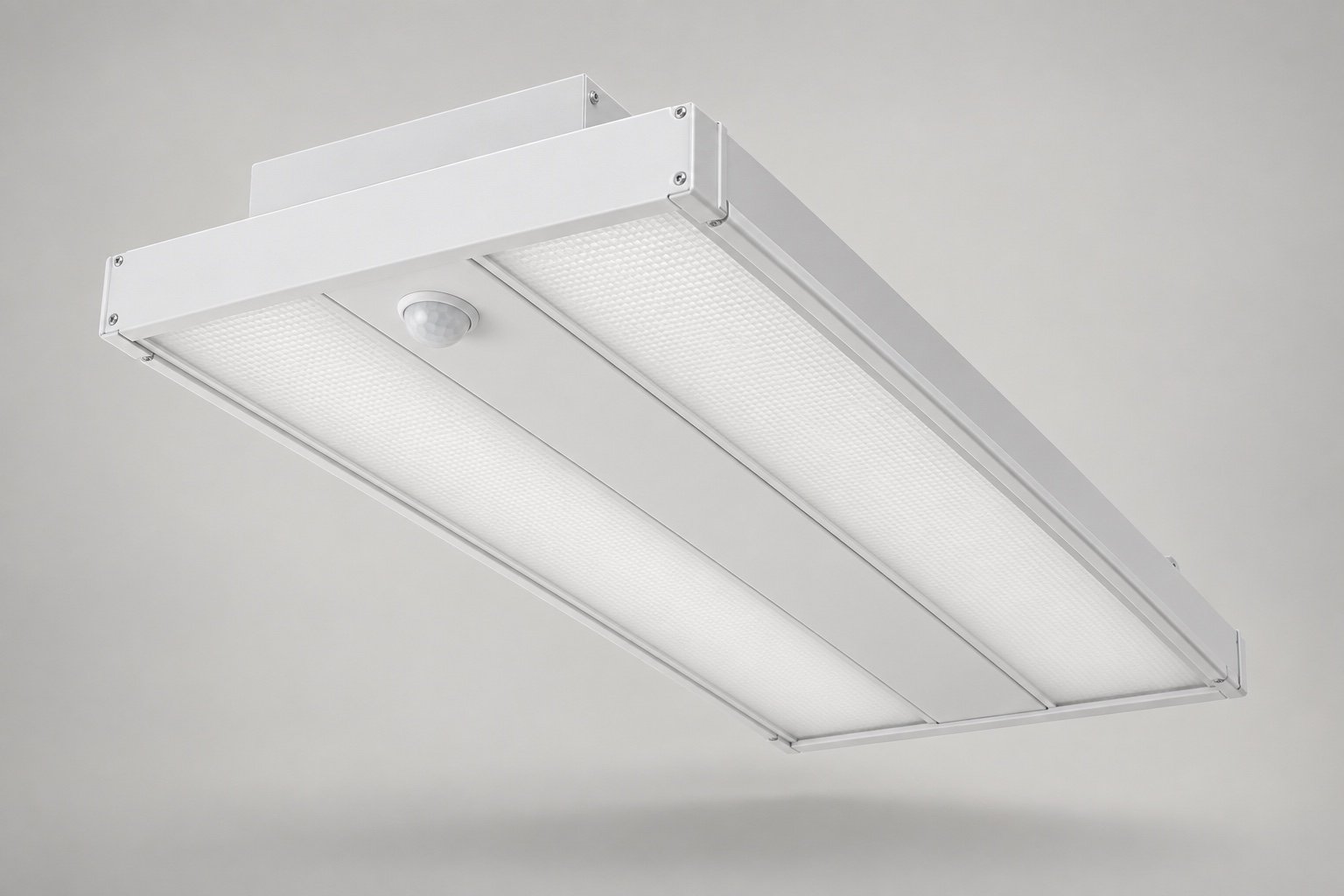
Meeting an efficacy target is one part of a DLC Premium review. For an indoor linear luminaire, the next questions concern category eligibility, controls, light quality, lifetime evidence and whether the complete sales configuration is represented consistently in the application.
Those questions have mechanical consequences. A selected driver or controller has to work within the available housing, and its evidence has to describe the way it is actually installed. Premium planning should therefore include optical, electrical and structural inputs from the beginning.
Requirements reviewed September 22, 2026 against the final V6.0 document updated April 15, 2026.
Check Premium eligibility for the exact product
Premium eligibility is not automatic for every product that might qualify at another level. Section 14.2 excludes specified product types, including replacement lamps, linear-style retrofit kits for 2×2, 1×4 and 2×4 luminaires, and products designated Specialty. The complete eligibility rules and applicable performance tables are in the DLC technical requirements.
A separate correction is important for indoor linear products: Section 14.1 removes Premium UGR requirements for Linear Ambient, High-Bay and Low-Bay PUDs. Troffer requirements remain. An old checklist that treats UGR as a universal Premium threshold can therefore send the redesign toward the wrong problem.
The customer may still have a glare or luminous-appearance target. That target should be documented as an application requirement alongside the qualification criteria. It should not be attributed to DLC unless it applies to the actual category and claim being made.
Specify controls capability and dimming together
The controls review needs the driver, any integral sensor or controller, available receptacles, dimming behavior and the options offered under each model. Table 21 requires Premium products to provide continuous dimming to 10% of initial output or lower and to meet a controls category other than Category 0. These details should form a configuration record that the specification sheet and controls documentation can follow.
Controls Ready has a specific meaning in Section 5.4. It involves an integral receptacle supporting an accessory's installation and functionality under the stated conditions. A spare knockout for a field-installed sensor does not qualify as Controls Ready. The document also distinguishes the mechanical fit of a receptacle from full interoperability.
This matters when an OEM asks to “leave room for controls.” Spare space can be useful engineering provision, but it does not establish a qualification claim. The proposed driver, accessory and interface need a compatible arrangement, with the applicable control-category and dimming requirements checked against the final product.
Verify driver temperature and lifetime evidence
A driver's catalogue lifetime statement is not, by itself, evidence that the same condition exists inside a particular luminaire. Table 21 sets a driver-lifetime threshold of at least 50,000 hours and adds L90 of at least 36,000 hours to the applicable L70 requirements. Driver lifetime and lumen maintenance are separate checks; the same evidence does not automatically answer both.
The driver review needs its specified temperature measurement point, supporting temperature/lifetime information and installed operating condition. Light-quality requirements also remain part of the category-specific review; clearing the controls and lifetime checks does not establish complete Premium compliance.
Section 14.3 requires the relevant in-situ thermal report and supporting manufacturer documentation for Premium driver-lifetime evaluation. The report measures the designated power-supply temperature point, and the evidence package includes its location. The applicable laboratory and reporting requirements also need to be satisfied.
From an engineering perspective, that makes driver location and installation part of the review. A change in compartment, mounting or surrounding components should prompt a check of whether the existing evidence still represents the product. The drawing alone cannot resolve the thermal result.
Integrate sensors and controllers without compromising the luminaire
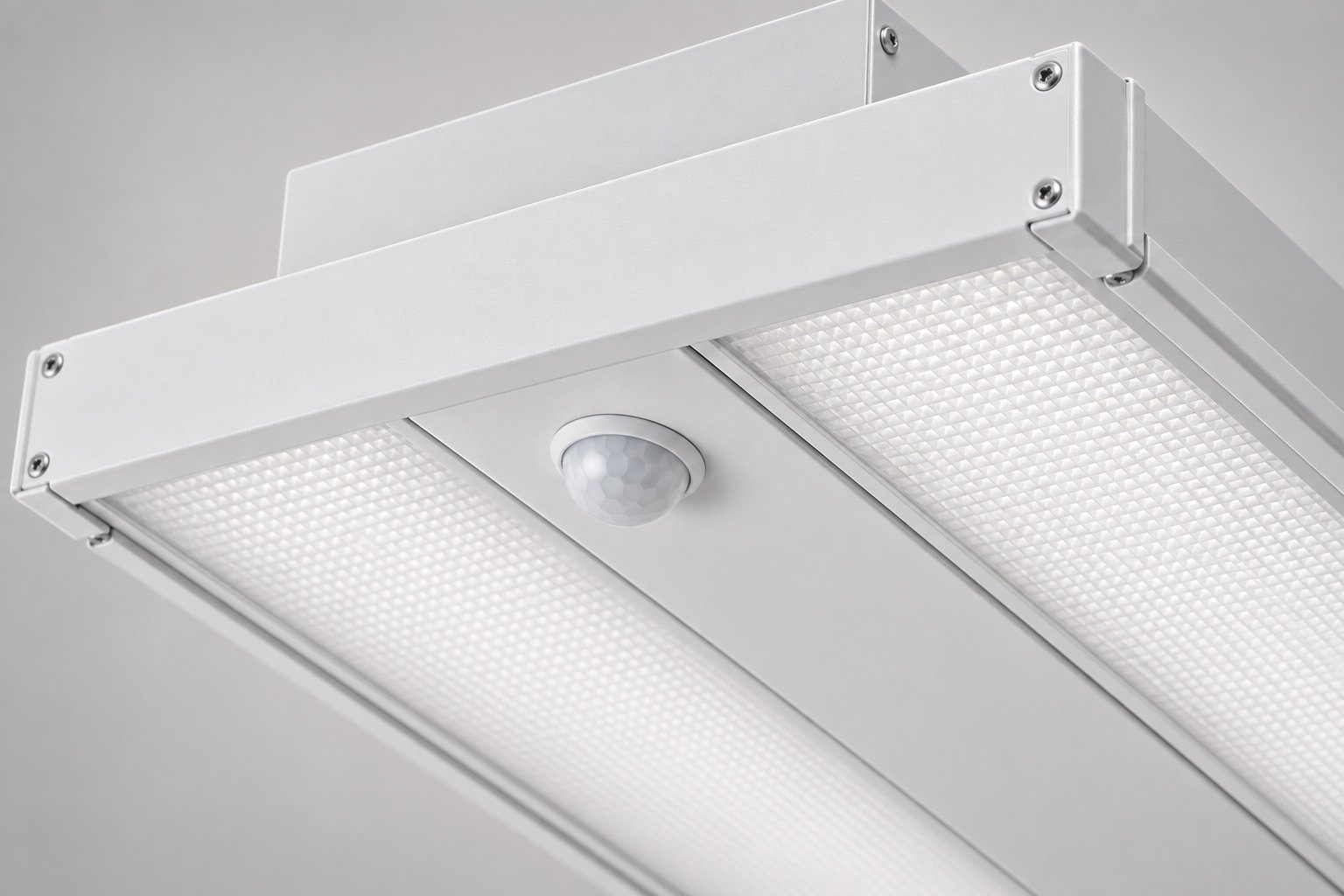
For the complete luminaire, the integration review should cover both available space and how the assembly functions. A sensor needs the intended sensing position; connectors and wiring need an achievable assembly route; the driver and controller need access consistent with the service plan. The optical system must retain its intended relationship to the source and opening.
| Integration question | Engineering input | Evidence still needed |
|---|---|---|
| Can the chosen parts be installed? | Sections, component envelopes and assembly sequence | Fit and assembly review of the proposed configuration |
| Will the intended controls work together? | Driver, accessory, interface and control descriptions | Compatibility and performance information for that combination |
| Is the installed driver condition acceptable? | Location and mounting arrangement | Applicable thermal report and driver documentation |
| Does the optical arrangement remain represented? | Optic, source and housing revision | Relevant complete-luminaire performance evidence |
These checks are a practical coordination framework. They do not replace the official qualification requirements or the applicable product-safety review.
Keep model numbers and control documentation aligned
A model with a controls-ready interface and a model shipped with an integral controller should not disappear into an ambiguous option description. The application owner needs a model matrix that identifies what is actually supplied and how each option is documented.
Before testing or submission, the team should reconcile model suffixes, driver and control references, sample identifiers and specification revisions. The DLC common-issues guide provides a useful check on document consistency and missing information.
Felix supports the optical and mechanical side of this coordination. Discuss a Premium redesign with the target category and level, driver and control datasheets, current reports and housing constraints. The resulting scope can identify which integration changes need design work and which questions belong with the laboratory or application owner.