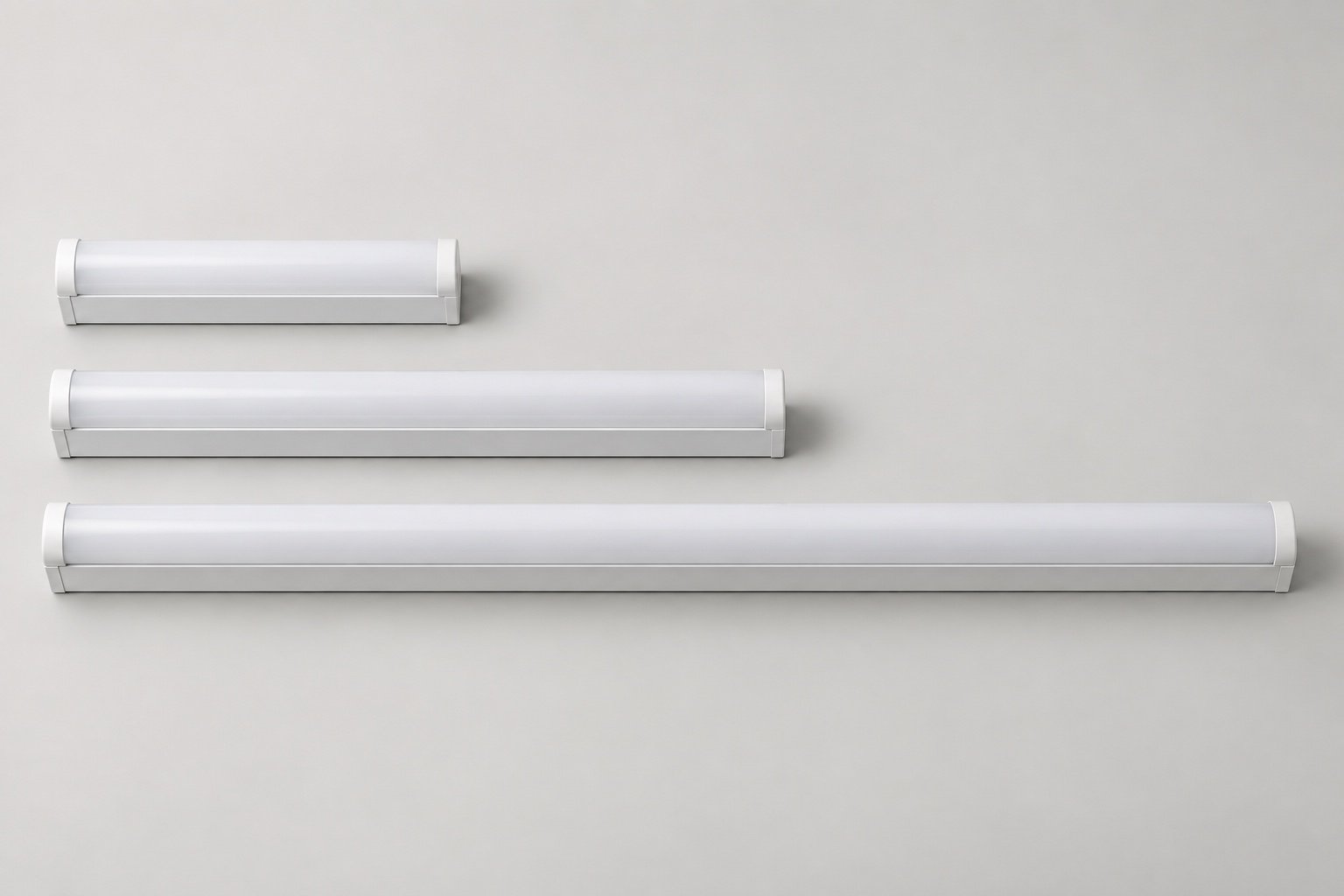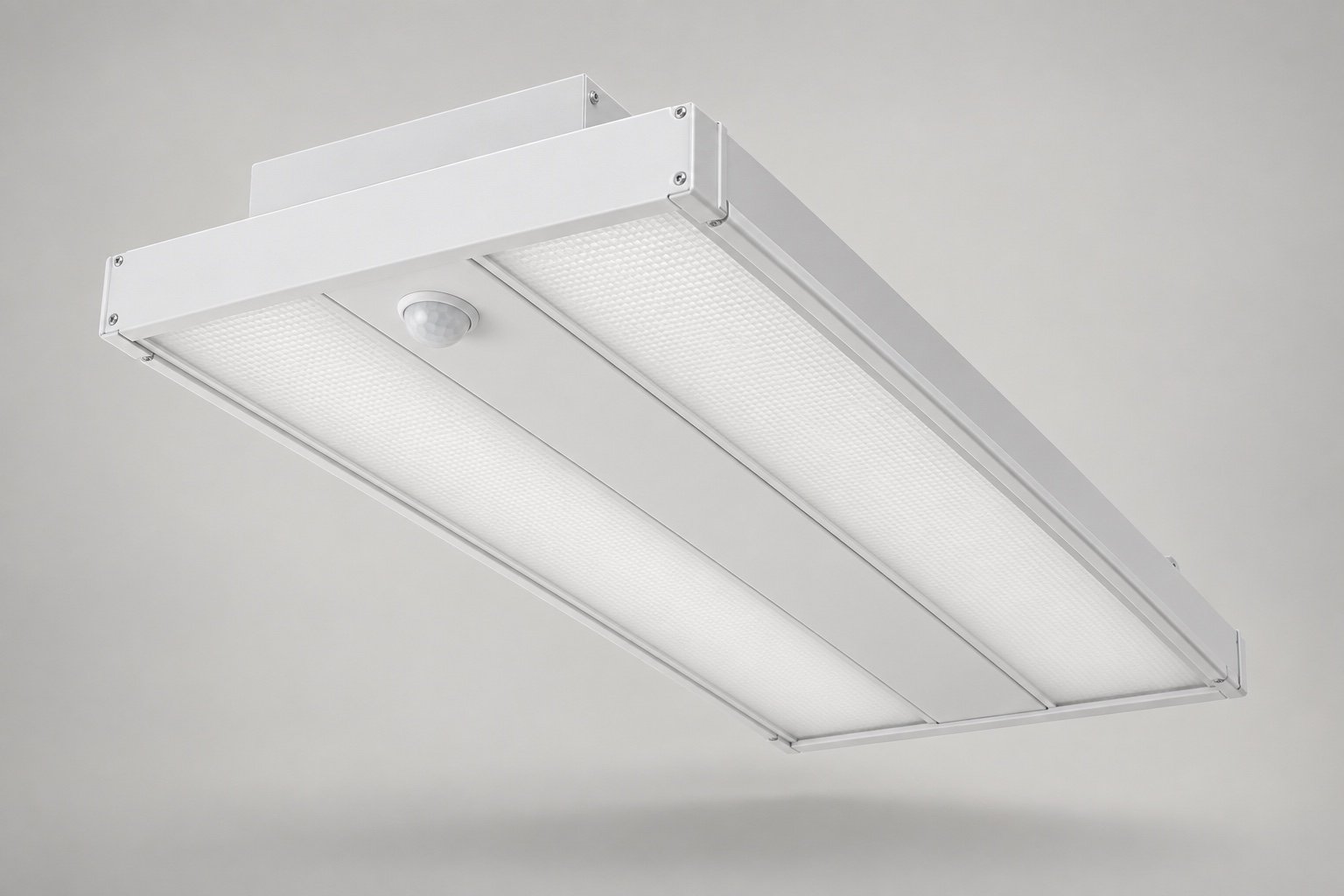
Two linear lighting quotes can both describe “12 metres” while supplying different things. One may cover profiles and diffusers; another may cover assembled luminaires with drivers. Mounting parts, connections and delivery can sit outside either headline price.
To compare linear lighting quotes, first make the supply boundary and quantity basis the same. Then mark what each offer includes, excludes or leaves unconfirmed. A price difference becomes useful only when you can explain the difference in the goods, performance and responsibilities behind it.
This guide starts after quotations arrive. If the original enquiry still lacks controlled drawings or a length schedule, use the custom LED profile RFQ checklist to close those inputs first.
Fix the supply boundary and the reference run
Write one sentence describing what the project intends to buy: raw profiles, finished profile-and-accessory sets, or assembled luminaires in a defined configuration. Separately identify any installation, control equipment or commissioning service required. The word “complete” needs a written boundary.
For a hypothetical comparison, four straight suspended runs of 3 m give 12 m of overall run length. Run identifiers, the drawing revision, mounting condition and required light-emitting length make that example a common basis for both offers.
Overall run length and light-emitting length can differ where a system includes non-luminous connections or infill sections. Each offer should identify which length its quantities describe.
Ask each supplier to map its offered sections and quantities to the same run schedule. Record whether the unit is a metre, a cut section, a kit, a complete run or a project lot. If a quote uses standard bars, ask how the supplied lengths become the required finished lengths and who performs the cutting or assembly. Do not convert to a price per metre while leaving those differences hidden.
Mark each line included, excluded or unconfirmed
Use three plain states: included, excluded and unconfirmed. “Included” should point to a quotation line or written clarification. “Excluded” needs an identified supplier or party responsible for providing it. “Unconfirmed” remains an open item.
The scope of suspension parts, continuous-run connections, drivers and end caps varies between products and offers. A line marked “included” needs an identifiable component, quantity and configuration in the quotation.
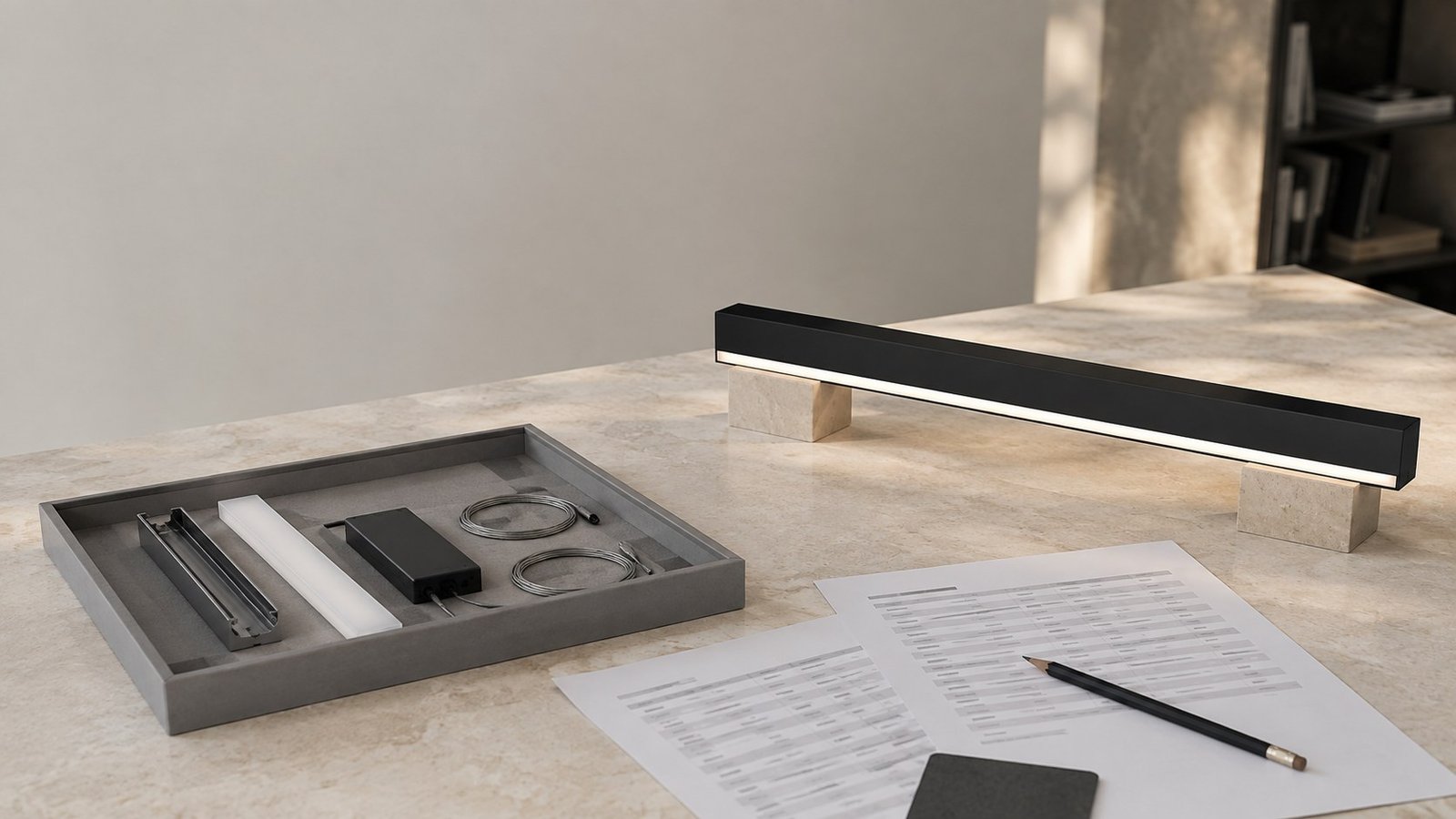
The following table is an invented comparison for the four-run example. It contains no real supplier quotation or prices.
| Scope line | Offer A | Offer B | Action before comparison |
|---|---|---|---|
| Profile and optical cover | Included for 12 m | Included in four run sets | Match section codes and finished lengths |
| LED modules and drivers | Excluded | Included, model stated | Obtain A’s complete supply option; verify B’s configuration |
| Suspension and run connections | Unconfirmed | Listed accessories included | Confirm parts and quantities against the run drawing |
| Delivery to the named location | Excluded | Unconfirmed | Obtain the same delivery basis for both |
Offer A is not necessarily a poor offer. It may correctly price a component package. It simply cannot yet be ranked against Offer B as the price of the same assembled lighting scope.
Turn a blank cell into a precise question
Replace “accessories included?” with “Please identify the suspension parts, end conditions, run connectors and power-entry components included for runs L1–L4, with quantities and part references.” The supplier can then respond to an actual arrangement.
Do not assign one accessory per metre by habit. A continuous system’s joints, supports and electrical connections depend on the selected system and run layout. Ask for the relevant configuration or installation information, and distinguish parts supplied loose from work completed before shipment.
Check that the technical configuration is comparable
Once the supply boundary matches, compare what the offered luminaire is intended to do. Record the selected optic, light output and its stated basis, colour characteristics, driver option and control requirement. Link each entry to the offered model or configuration, rather than to a family brochure that contains several alternatives.
A driver brand alone does not identify the ordered driver or settle a control requirement. Likewise, two profiles with similar visible widths need not represent the same optical assembly. Ask for the particular model and supporting information where the difference affects the project.
Use the linear luminaire cutsheet checklist to check the surrounding evidence. If a proposed alternative changes an agreed requirement, keep that change visible beside its price. The designer or responsible technical reviewer can then assess the alternative before it is treated as equivalent.
This prevents a misleading comparison in either direction. A lower total may reflect a narrower scope, while a higher total may include an option the project never requested. Neither explanation should be assumed without checking the offer.
Separate recurring supply from one-off and delivery costs
Keep the recurring product quantity and unit price separate from development, tooling, samples or other one-off charges that actually apply. Show required accessories and agreed services as identifiable lines, even when the supplier includes them in a package price.
For a working comparison, use the quoted base amount plus confirmed required additions, applicable one-off charges and the agreed delivery basis. List optional items separately. An inclusion already covered in the base amount must not be added again.
Leave an unknown addition marked unresolved. Entering zero for an unpriced driver, connector set or freight line can make an incomplete offer appear complete. If you use a provisional internal allowance, identify its owner and basis and keep it distinct from the supplier’s confirmed quotation.
Record currency, quoted quantity, delivery destination, tax treatment as stated in the offer, payment conditions and quotation validity. Ask the supplier to clarify differences; this article does not prescribe a universal commercial term or calculate taxes. If offers use different delivery arrangements, obtain a common comparison basis before presenting a final total.
Keep programme assumptions beside the total
Ask what starts the quoted lead time: order acceptance, payment, drawing approval, sample approval or another stated event. Record dependencies that remain open and the party responsible for closing them.
A requested site date is not the same as a supplier’s confirmed delivery commitment. Packaging, labelling, split deliveries and sample approval can also form part of the offered arrangement. Keep the actual written conditions beside the amount so the comparison does not lose them when it is summarised.
Close the comparison with a revised written offer
Send one consolidated clarification request, referenced to the quotation and run-schedule revision. For example: “Please return a revised offer for runs L1–L4 on drawing revision B. Confirm the listed supply boundary, mark each open item included or excluded, identify the offered technical configuration and show any required additions separately. Please state the delivery basis and the conditions behind the programme.”
Retain the response with the revised quotation. An informal answer is easy to lose if the final offer still repeats an earlier assumption. Before recommending an option, confirm that the remaining differences are understood technical or commercial choices, rather than unidentified omissions.
If the offers reveal a more basic difference between buying components and sourcing coordinated supply, the LED profile sourcing guide helps you revisit that route. To identify the relevant Felix family, start with the product range.
For a Felix quotation, send the quote reference, annotated run schedule and unresolved scope lines. Ask for a revised written scope for the configuration being considered. That gives the next conversation a clear purpose: confirm what Felix is offering, what remains outside the offer and what information is still needed for a fair comparison.